A site where you can find recommended contractors for non-clinical testing|effical " Advanced Analysis and Imaging

Advanced Analysis and Imaging

In preclinical drug development, 2D pathological assessment and routine pharmacokinetic analysis are mainstream. However, these methods alone face challenges in fully demonstrating the detailed mechanism of action (MoA) of a drug or its accessibility to target tissues. This article will explain what advanced analytical and imaging technologies exist and the criteria for selecting them.

Reasons why "advanced analysis and imaging" are required in non-clinical studies

"True medicinal effects" that are overlooked in standard evaluation systems

In non-clinical studies, standard evaluation systems alone may be insufficient to capture the "true pharmacological effect." 2D pathology relies on fragmented cross-sectional information of tissues, thereforeUnable to determine if the drug adequately reaches the target in terms of surface area or three-dimensionality, potentially leading to false negatives.There are concerns that dramatic changes occurring in rare cell populations may be masked by average data across the entire organization. Furthermore, traditional sampling intervals present challenges in capturing the discontinuity of dynamics, such as instantaneous in vivo responses or local accumulation.

The Role of Advanced Technologies in Improving Clinical Predictability (Extrapolation)

To improve clinical predictability (extrapolation),Cutting-edge technologies that reproduce human-specific reactions in the preclinical stage are important.This allows us to reduce the risk of unexpected dropouts in clinical trials due to animal species differences by utilizing humanized mice and PXB mice (humanized liver models). Ultra-high sensitivity measurement technologies such as Simoa can detect early changes in extremely low levels of biomarkers, similar to human clinical settings. In addition, by directly reflecting image and omics data obtained in non-clinical studies into the clinical protocol design,Enhance translational science and improve the quality of bridge researchWill make it happen.

Building Evidence to Accelerate Out-licensing and Fundraising

To accelerate licensing out and fundraising, building compelling evidence is essential.In addition to graphs and tables, "visual impact" such as 3D videos and high-resolution imaging is also important.This intuitively helps investors and partners understand and speeds up decision-making. Quantitative data that ensures objectivity, such as AI-driven automatic scoring, demonstrates high reliability in due diligence and works in your favor. By including original mechanism proofs from advanced analysis in addition to standard data, it can also lead to an increase in the valuation of the pipeline.

Key Non-clinical Advanced Analysis and Imaging Technologies

Whole-brain 3D imaging

Whole-brain 3D imaging isA method for three-dimensionally visualizing and analyzing the entire brain using a technique for transparentizing brain tissue.This allows for three-dimensional evaluation of the extent of neural circuits and network structures, which could not be fully understood with conventional 2D slice analysis, as well as the distribution of drugs in the brain. By spatially capturing drug efficacy and sites of action, mechanisms can be analyzed in greater detail.

Organizational transparency technologies (CUBIC/iDISCO, etc.)

Organizational transparency technologies (such as CUBIC and iDISCO)A technique that makes organs transparent through chemical processing, allowing for three-dimensional observation of internal structures at the cellular level.This allows for the analysis of entire organs without sectioning, providing a three-dimensional understanding of cell distribution, nerve fibers, vascular structures, and drug localization. It enables high-resolution evaluation while preserving spatial information.

Light sheet microscope analysis service

Light sheet microscopy analysis servicesA new technology for three-dimensional imaging of large tissues with high speed and low damage by illuminating samples with thin light sheets.Because it can acquire a wide area in a short time with high resolution, it can efficiently visualize the three-dimensional structure, cell distribution, and drug localization of cleared organs and whole brain samples.

Spatial Transcriptomics

Spatial transcriptomics isTechnology that maps "where" and which genes are expressed within an organization, along with location informationThis allows for visualization of expression changes in each cell population while retaining spatial information that was lost in traditional bulk analysis. It can precisely capture local responses and micro-environmental changes due to drug administration.

Mass Spectrometry Imaging (MSI)

Mass spectrometry imaging (MSI) isTechnology that can visualize the distribution of molecules such as drugs, metabolites, and lipids within tissues without using fluorescent labelsIt directly detects molecule-specific masses on tissue sections and maps them in conjunction with spatial information. This allows for objective understanding of drug localization and metabolite production sites, contributing to advanced analysis of mechanisms of action and toxicity assessment.

Single-cell analysis (scRNA-seq)

Single-cell RNA sequencing (scRNA-seq) isTechnology for isolating cells one by one and analyzing their gene expression profilesThis allows for the capture of rare cells and subtype-specific changes that would be obscured by the average of a population, enabling the detection of subtle pharmacological responses at high resolution. It is also useful for identifying the cellular populations that serve as the starting point for efficacy or adverse effects.

Ultra-sensitive cytokine measurement (Simoa/MSD)

Ultra-sensitive cytokine measurement (Simoa/MSD) isTechnology that can accurately quantify trace amounts of proteins that were difficult to detect with conventional methodsWith Quanterix's Simoa and Meso Scale Diagnostics' MSD platform, fluctuations in low-concentration cytokines can be understood from the preclinical stage. This is useful for early efficacy evaluation and safety signal detection.

Multiplex immunoassay

Multiplex immunoassay isA technology that can simultaneously measure tens of biomarkers from a single sampleWith a limited sample volume, it allows for the simultaneous assessment of changes in multiple molecules, such as inflammation-related factors and growth factors, contributing to improved time and cost efficiency. This is a method that enables multifaceted analysis of drug efficacy evaluation and safety profiles.

Digital Pathology AI Analysis

Digital pathology AI analysis isA method for digitizing pathological specimens at high resolution and quantifying cells and tissue structures using AI-powered automated segmentation.This converts organizational images, which tended to rely on subjective evaluations, into objective numerical data, improving reproducibility and analysis efficiency. It also allows for precise comparison of subtle differences in drug efficacy and toxicity changes.

Flow Cytometry Multicolor Analysis

Flow cytometry multicolor analysis isA method for simultaneously identifying immune cells using multiple fluorescent antibodies to precisely profile their fractions and activation states.By combining surface markers and intracellular factors, we can evaluate subset variations and functional changes at high resolution. This allows for a quantitative understanding of the overall immune response and cell-specific reactions.

Small Animal PET/CT Imaging

Small animal PET/CT imaging isA technology that allows radioactive tracers to be administered to live animals to track drug distribution and metabolism over time.By integrating functional information from PET and anatomical information from CT, we visualize accumulation and clearance in target organs. Longitudinal evaluation allows for high-precision analysis of dynamic changes within the same individual.

Two-photon excitation microscopy in vivo observation

In vivo observation using two-photon excitation microscopy,A technology that uses near-infrared light to reach deep into tissues and obtain high-resolution images under conditions that are unlikely to harm living organisms.This allows for real-time visualization of cell movement, immune cell behavior, and blood flow dynamics within living organisms. It can capture both the temporal and spatial axes simultaneously, enabling the analysis of instantaneous changes in drug responses.

Calcium imaging

Calcium imaging is,Technology for visualizing intracellular calcium concentration changes using fluorescent indicators and genetically encoded sensors.It allows for the real-time measurement of calcium signals associated with the activity of nerve cells and cardiomyocytes. It is possible to evaluate excitability and synchronized activity. It is utilized as an analytical method to dynamically capture functional changes caused by drugs.

Blood-Brain Barrier (BBB) Permeability Real-Time Evaluation

Real-time evaluation of the blood-brain barrier (BBB) permeability isMethods for directly observing the process of drug transfer from blood vessels to brain parenchyma using fluorescently labeled compounds and imaging techniquesThis allows visualization of transit speed and localized leakage, which could not be captured by conventional endpoint measurements, and is useful for quantitative evaluation of brain permeability and optimization of central nervous system drugs.

Organ-on-a-Chip

Organ-on-a-chip is,Technology for culturing human-derived cells on microfluidic devices to mimic organ structure and functionIt enables high-precision measurement of drug responses and toxic reactions while reproducing physiological environments such as blood flow and mechanical stimulation. It is also useful for evaluating human-specific responses that are difficult to capture in animal models.

Liquid biomarker comprehensive exploration

Comprehensive exploration of liquid biomarkers,A method for comprehensively analyzing bodily fluids such as whole blood, plasma, and serum to identify novel therapeutic targets by examining miRNA, proteins, and exosomal components.It serves as the foundation for translational research, contributing to efficacy prediction, early safety assessment, and patient stratification due to its minimally invasive nature and ability to enable longitudinal sampling.

Exosome Analysis Services

Exosome analysis outsourcing isService to isolate exosomes, which are microvesicles responsible for intercellular communication, from body fluids or culture supernatants, and analyze their internal contents such as miRNA, proteins, and lipids.We support the identification of disease-related signals and drug response markers by high-purity separation and characterization, contributing to the advancement of drug discovery research.

Metabolome analysis

Metabolome analysis isA method for comprehensively measuring low-molecular-weight metabolites in the body to understand the metabolic state within living organisms.By comparing metabolic profile changes before and after drug administration, it is possible to elucidate the mechanism of action and detect off-target effects. This allows for a systematic evaluation of the biological response.

Target Engagement Evaluation

Target engagement evaluation isMethods to directly prove that a drug is actually binding to its intended target molecule in vivoAnd through CETSA and occupancy analysis, we quantify the presence and strength of binding at the site of action. This provides important evidence to support the prerequisites for drug efficacy.

Bioinformatics analysis support

Bioinformatics analysis support isAn initiative to extract meaningful conclusions through statistical and network analysis by integrating vast omics data such as genomics, transcriptomics, and proteomics.It efficiently supports hypothesis building of mechanisms of action and identification of promising biomarkers by visualizing signals that tend to be buried in noise.

Key points for selecting a CRO when outsourcing advanced analysis

Possession status of special assets and availability of validation data

When outsourcing advanced analysis, C Confirm that RO possesses the proprietary assets (specialized equipment, unique models, humanized animals, analytical algorithms, etc.) required for the technology in-house.It is important. In addition, the degree of platform validation and the ability to present reproducibility and past performance data are also important judgment criteria. Not only the presence of equipment, but also whether it is backed by reliable validation data is crucial for success or failure.

Flexibility in building science-based protocols

When selecting a CRO, it's important not only to implement existing menus but also to be able to flexibly design protocols according to objectives and hypotheses.Confirm the ability to design based on science, including optimization of the testing system, dose setting, and proposals for additional evaluation metrics.Let's do it. A system that can adjust experimental conditions according to the drug discovery stage and target characteristics, rather than a standardized operation, leads to the generation of high-quality data.

Ensuring data reliability for regulatory submissions

If you are planning to submit an application to regulatory authorities, ensuring data reliability is extremely important.Confirm the presence of a GLP-compliant system, the status of SOP development, and efforts towards data integrity.It is also necessary. In addition, the ability to save and trace raw data, validate the analytical algorithms, and demonstrate a track record of audit readiness are important decision-making factors. Even for advanced analyses, a quality standard that can be used as material for future approval applications is required.

The integration of advanced analytics is essential for next-generation preclinical strategies.

In next-generation non-clinical strategies, it is essential to integrate advanced analyses such as 3D imaging, omics analysis, and ultra-sensitive measurements, in addition to conventional evaluations. By multilayeredly connecting spatial, temporal, and molecular information, it is possible to enhance the validation of mechanisms of action and clinical predictability. Collaboration with CROs that can generate reliable data leads to maximizing the probability of development success and business value.

3 Recommended Contract Research Organizations for Non-Clinical Studies
— by Target goal and Expertise

In drug discovery, the quality and efficiency of non-clinical studies have a direct impact on clinical success rates, development costs, and overall length of time required in R&D. In recent years, there has been more demand for clinically relevant data, globally accepted reliability, and accurate early-stage screening. Thus, it is more important than ever to select the right CRO (Contract Research Organization) for strategic approach.
In this article, we highlight three CROs with proven technical capabilities, expertise, and long standing track records. These are our TOP 3 choices based on their capabilities and the specific target goals of the researchers for their non-clinical studies.

Pharmacology (Efficacy) Studies
Replicate unknown pathological models and
Discovery to clinically oriented drug evaluation
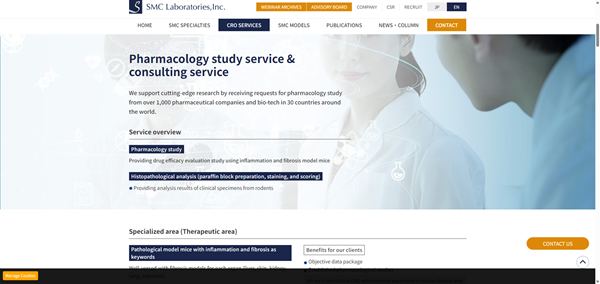
SMC Laboratories, Inc.
Reference: SMC Laboratories official website (https://www.smccro-lab.com/jp/)
  • SMC Laboratories has established a disease models using patented mouse technologies. The company has established proprietary pathological models—particularly in liver disease and fibrosis—and continues to expand their approach across a wide range of models in cancer, inflammation, and metabolic diseases.
  • From exploratory research to clinically oriented efficacy evaluation, SMC offers customized study designs, dosing strategies, and evaluation analysis tailored to each project. Their collaborative approachallows researchers to discuss and refine study plans together with SMC’s expert scientists.

  • With flexible small-scale study options and strong technical support, SMC Laboratories is an ideal partner for start-ups, biotech ventures, and academic institutions alike.
Safety Studies
Comprehensive Safety Evaluation for FIH Applications
labcorp
(Labcorp Drug Development)
labcorp
Reference: labcorp official website (https://jp.labcorp.com/)
  • labcorp provides a fully integrated GLP testing system aligned with international regulatory standards, including FDA, EMA, and PMDA requirements. All studies are conducted under ICH-compliant quality assurance, making it ready for data submission.
  • The company has extensive expertise in long-term toxicity studies such as Segment I–III reproductive and carcinogenicity studies, as well as 2-year chronic toxicity assessments.
  • labcorp’s comprehensive approach enables sponsors to efficiently outsource the entire preclinical package from toxicology, toxicokinetic (TK), and safety pharmacology study design to execution. This accelerates a path to First-in-Human (FIH) trials. For most of the global drug developers, this all-in-one service structure minimizes cost, risk, and expedite the time before advancing to clinical phase.
Pharmacokinetic (PK/PD) Studies
High-Precision Bioanalysis for Clinically Predictive PK/PD Evaluation
PhoenixBio
PhoenixBio
Source: PhoenixBio Official Website (https://phoenixbio.co.jp/)
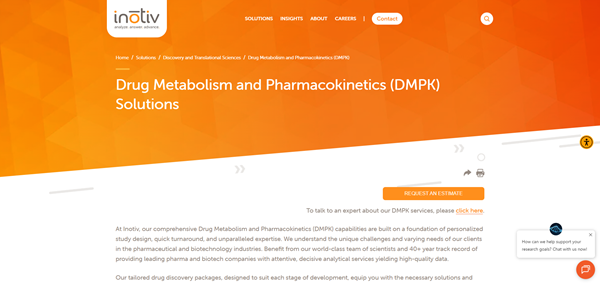
  • PhoenixBio offers pharmacokinetic and hepatic metabolism studies using their proprietary PXB-mouse®, a humanized-liver chimeric mouse model. This platform enables the acquisition of data with high clinical correlation in ADME, drug–to-drug interaction studies, bridging the gap between preclinical and clinical stages.
  • With advanced LC-MS/MS-based bioanalysis, PhoenixBio provides aseamless workflow from plasma concentration measurement and metabolite identification to quantitative validation.

  • The company offersan integrated evaluation analysiscovering pharmacokinetics, hepatotoxicity, and safety with flexibility to accommodate complex modalities such as oligonucleotide and middle-molecule therapeutics. For compounds where hepatic metabolism is a development bottleneck—or where quantitative, reproducible exposure data are critical—PhoenixBio delivers unmatched analytical precision and consistency.

Consult Phoenix Bio for PK/PD analysis with a clinical focus