Cilcare
Cilcare is a non-clinical research organization specializing in the early-stage evaluation of drug candidates, with advanced testing platforms focused on auditory and vestibular functions.
The company provides contract non-clinical studies spanning in vitro, ex vivo, and in vivo systems through its own and partner facilities.
Cilcare supports ototoxicity assessment and comprehensive analytical approaches under GLP environments and offers integrated services from study design and data generation to pre-regulatory consulting for global submissions.
Features of Cilcare’s Contract Services for Non-Clinical Studies
High-Quality Ototoxicity Studies Conducted Under GLP Conditions
Cilcare performs preclinical evaluations of pharmaceuticals and medical devices related to hearing and ear disorders in GLP-compliant environments.
Through collaboration with CBSET in the United States, studies can be conducted at AAALAC-accredited facilities, supporting a wide range of species from rodents to large animals.
Auditory function is precisely evaluated using multi-parametric methodologies, including ABR, DPOAE, and histopathological analysis.
The evaluation framework follows FDA guidelines and enables the generation of highly reliable data suitable for international regulatory submissions.
Precise Pharmacology and PK Analysis Using Cochlear Explants
Serving as a translational bridge between in vitro and in vivo studies, Cilcare conducts evaluation assays using cochlear explant models (ex vivo).
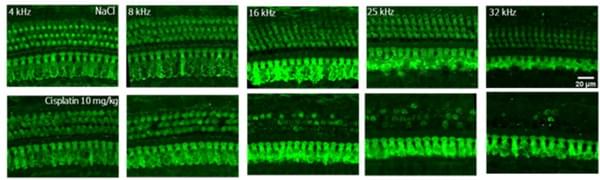
Analyses focus on inner and outer hair cells, ribbon synapses, and neuronal cells. Using toxicity models induced by compounds such as cisplatin and gentamicin, Cilcare investigates mechanisms of action in detail.
These studies support dose optimization and efficacy evaluation and function as screening tools that improve early predictions of efficacy and safety prior to animal testing.
Rapid Cellular-Level Screening and Safety Evaluation
Cilcare utilizes in vitro models based on HEI-OC1 mouse cell lines derived from the organ of Corti to evaluate ototoxicity and protective effects of candidate compounds.
Multiple endpoints—including cell viability, reactive oxygen species (ROS) generation, and caspase activity—are measured. Reproducibility is strengthened through collaboration with Neuro-Zone.
The platform has been successfully applied to early-stage compound screening and safety prediction, including validation of the protective effects of N-acetylcysteine (NAC).
Example of Disease Models Available at Cilcare
Zebrafish-Based Compound Screening Model
Zebrafish share more than 85% genetic homology with humans, and their transparent embryos allow visualization of inner ear hair cell alterations.
Cilcare utilizes zebrafish ototoxicity models induced by agents such as cisplatin to efficiently perform large-scale compound screening and evaluation of protective effects.
Noise-Induced Hearing Loss and Synaptopathy Mouse Model
Cilcare employs mouse models that reproduce temporary or permanent hearing threshold shifts following noise exposure.
These models enable multifaceted evaluation of pharmacological effects related to oxidative stress, inflammation, and neuronal regeneration. By combining ABR, DPOAE, and histological analyses, Cilcare designs studies to elucidate disease progression mechanisms associated with hearing loss and synaptic damage.
Cilcare Non-clinical Case Studies
Evaluation Using a Cisplatin-Induced Ototoxicity Model
In zebrafish administered the anticancer agent cisplatin, Cilcare observed significant reductions in sensory hair cells within the inner ear.
Fluorescent staining techniques enabled visualization of cellular damage, allowing quantitative analysis of drug-induced ototoxicity. This model is also applicable for evaluating otoprotective therapeutic candidates.

Reference: Silcare's official website (https://www.cilcare.com/our-missions-external-innovation/screening-dose-selection-for-ototoxicity-or-otoprotection/)
Noise-Induced Synaptopathy Model
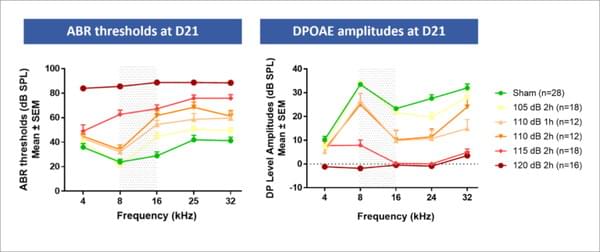
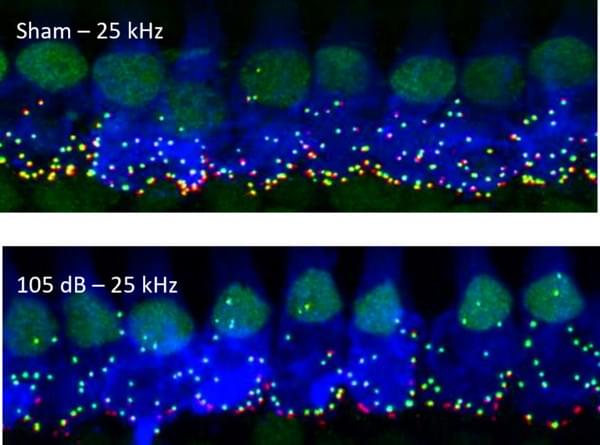
In rats exposed to 105 dB acoustic stimulation, Cilcare observed a marked reduction in ribbon synapse numbers.
Functional assessments including ABR and DPOAE, combined with histological analyses, enabled evaluation of the pathogenesis and recovery processes associated with noise-induced hearing loss.
These models are also utilized to investigate the neuroprotective potential of drug candidates.
Reference: Silcare official website (https://www.cilcare.com/our-missions-external-innovation/in-vivo-models/)
Reference: Silcare official website (https://www.cilcare.com/our-missions-external-innovation/in-vivo-models/)
Reference: Silcare official website (https://www.cilcare.com/our-missions-external-innovation/in-vivo-models/)
Cilcare Company Information
| Address |
Sanofi Biopark, 378 rue du Professeur Blayac, 34080 Montpellier, France |
| Tel |
+33 (0)7 81 34 16 31 |
| Website |
https://www.cilcare.com/ |

 Japanese