Cyagen
Cyagen is a contract research organization (CRO) providing non-clinical research services in drug discovery and regenerative medicine. The company delivers highly reproducible data through integrated services ranging from custom mouse model generation to in vitro and in vivo evaluations.
As Cyagen primarily operates as a research institution conducting studies in-house, it does not function as an intermediary agency.
Features of Cyagen’s Contract Services for Non-Clinical Studies
Integrated In Vivo and In Vitro Platforms for Comprehensive Efficacy Evaluation
Cyagen supports both in vivo efficacy studies using immunodeficient and humanized mouse models and in vitro evaluations utilizing cell-based assay systems.
The company leverages proprietary NKG mouse models alongside extensive oncology and immune reconstitution models to precisely evaluate the therapeutic efficacy of cell-based therapies, including CAR-T and NK cell therapies.
Multifaceted endpoints—including cytotoxic activity, cytokine secretion, ADCC, and ADCP—support the generation of highly reproducible preclinical datasets.
One-Stop Platform for Rapid Delivery of High-Quality Mouse Model
Cyagen provides customized genetically engineered mouse models—including knockout, knock-in, and transgenic lines—within accelerated timelines.
Using proprietary technologies such as TurboKnockout® and CRISPR-Pro, founder mice can be generated in as little as three to six months.
Cyagen maintains a fully integrated workflow covering genetic engineering, breeding, and quality validation, enabling cost-effective model development that accelerates drug discovery programs.
AI-Integrated Gene Therapy Development Platform
Cyagen offers CRO services integrating artificial intelligence with experimental validation for gene therapy development.
By leveraging its Rare Disease Data Center (RDDC) and deep learning technologies, Cyagen supports workflows from pathogenic mutation identification to AAV vector design and in vivo validation.
The combination of AI-driven predictive analysis and validation using custom cell and animal models streamlines early discovery through preclinical development, contributing to accelerated R&D timelines and improved success rates.
Example of Disease Models Available at Cyagen
Custom Mouse Models for Human Disease Research
Cyagen maintains a broad portfolio of genetically engineered mouse models supporting drug discovery and disease research.
The company develops knockout, knock-in, and humanized mouse models using proprietary technologies, including TurboKnockout® and CRISPR-Pro, enabling rapid and highly accurate disease model generation.
Transgenic Mouse Models Using Gene Transfer Technologies
Transgenic mouse models replicate specific disease phenotypes or biological functions through random integration of exogenous genes.
Cyagen provides end-to-end services, including vector design, pronuclear microinjection, and screening, to establish multiple founder lines with varying expression profiles, allowing selection based on specific research objectives.
Cyagen Non-Clinical Case Studies
Integrated Efficacy Evaluation from Cell-Based Assays to Animal Models
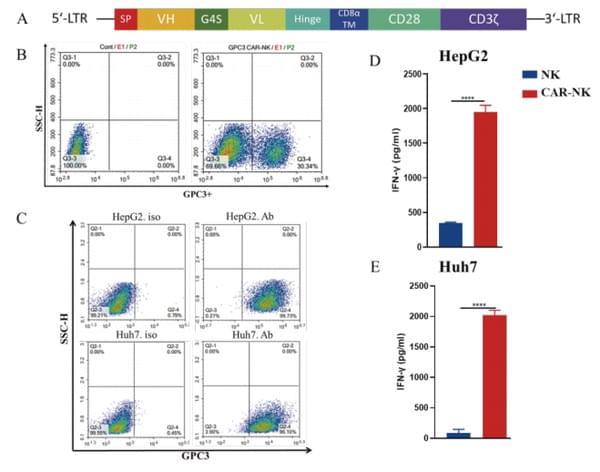
Cyagen evaluates therapeutic efficacy of cell therapy candidates—including CAR-T and CAR-NK therapies—through both in vitro and in vivo platforms.
In cell-based assays, immune cell activation is assessed through cytotoxicity assays against target cells and quantification of IFN-γ secretion.
In tumor xenograft studies using C-NKG mouse models, treated groups demonstrated tumor growth inhibition and prolonged survival.
These integrated experimental platforms support confirmation of therapeutic reproducibility and safety at the preclinical stage.
Reference: Cyagen's official website (https://www.cyagen.jp/business/products/cell-therapy-solutions/in-vitro-evaluation.html)
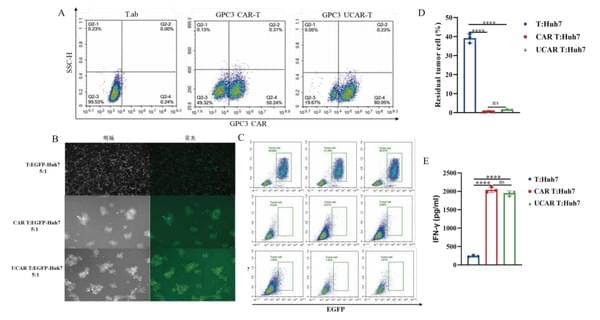
Reference: Cyagen's official website (https://www.cyagen.jp/business/products/cell-therapy-solutions/in-vitro-evaluation.html)
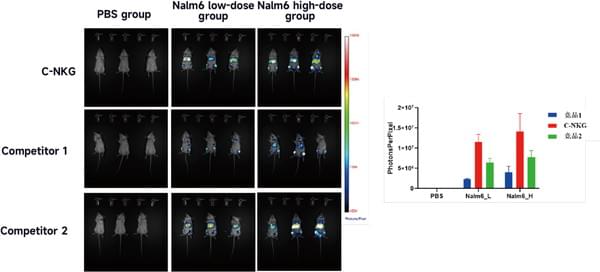
Reference: Cyagen's official website (https://www.cyagen.jp/business/products/cell-therapy-solutions/in-vivo-evaluation.html)
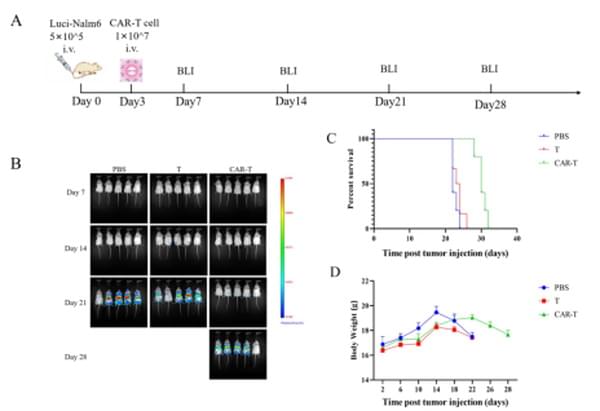
Reference: Cyagen's official website (https://www.cyagen.jp/business/products/cell-therapy-solutions/in-vivo-evaluation.html)
Cyagen Company Information
| Address |
2255 Martin Avenue, Suite E, Santa Clara, CA 95050-2709, USA |
| Tel |
+1 408-969-0306 |
| Website |
https://www.cyagen.jp/ |

 Japanese