Chimeric antigen receptor (CAR) natural killer (NK) cell therapy is a genetically modified lymphocyte product. The starting cells may be autologous or allogeneic, and the introduced receptor combines an antigen-binding domain with intracellular signaling domains. Product designs may also include cytokine-support or logic-gating components. FDA states that many of the chemistry, manufacturing, and controls, pharmacology and toxicology, and clinical recommendations in its CAR-T guidance are expected to apply to related genetically modified lymphocyte products, including CAR-NK cells.[S1]
Product-design approaches
No CAR-NK product appears on FDA's list of approved cellular and gene therapy products, current as of August 18, 2026.[S3] The categories below are therefore product-design approaches, not approved-product examples and not a ranking.
Cord-blood-derived CAR-NK with IL-15 expression
One design starts with cord-blood-derived NK cells and introduces a CAR together with an IL-15 expression cassette. For a program using this design, characterize CAR and IL-15 expression, growth and viability, and the relationship between administered cells and measured persistence. Treat cytokine expression as a product-specific safety variable as well as a design feature.
iPSC-derived CAR-NK
An iPSC-derived approach introduces genetic changes at the pluripotent-cell stage and differentiates the banked cells into NK cells. Candidate constructs may combine a CAR with other receptor or signaling modifications. Commissioning questions include clonal and bank characterization, differentiation consistency, residual undifferentiated cells, post-thaw identity and potency, and comparability after manufacturing changes.
NK-92-cell-line-derived CAR-NK
A cell-line-derived approach uses NK-92 cells as the manufacturing substrate. For such a product, define the controls used to limit proliferation and evaluate how those controls affect viability, potency, and cellular kinetics. The specific cell bank, genetic construct, manufacturing process, and release strategy should drive the test plan.
Development questions
Persistence and expansion
Measure how long administered cells remain detectable, whether they expand, and where they distribute. Link those measurements to the administered dose and to product attributes such as viability and cytokine-support design. These data describe cellular kinetics in the selected test system; they do not predict persistence or treatment effect in patients.
Inhibitory signaling and the tumor microenvironment
CAR signaling operates alongside the NK cell's endogenous activating and inhibitory receptor network. Design the assay panel to test whether HLA class I-dependent inhibitory signaling, soluble factors such as TGF-beta, or hypoxic culture conditions change the product's measured cytotoxicity. Report these as effects in the defined assay system, not as proof of behavior in a human tumor.
Gene transfer and post-thaw function
Gene-transfer efficiency, CAR-positive cell fraction, viability, recovery, and potency should be measured at release and after the actual freeze-thaw and handling procedure intended for the clinical site. A post-thaw result is only interpretable when the assay time point, recovery period, cell concentration, and acceptance criteria are defined in advance.
A product-specific nonclinical program
1. Model selection, biodistribution, and cellular kinetics
Select an animal model only after defining which questions it can answer about the human product. FDA advises considering immunodeficient animals when they permit longer assessment of a human cell therapy product.[S4] For a CAR-NK program, a sponsor may pair a validated nucleic-acid assay for CAR sequences with imaging or tissue analysis to measure biodistribution and persistence. Because model suitability and cytokine support are product specific, discuss the proposed model and its limitations with CBER before committing to the pivotal program.[S2]
2. Phenotype and function under defined stress conditions
Characterize both CAR-mediated activity and the endogenous receptor phenotype. Depending on the question, scRNA-seq, CITE-seq, or mass cytometry can measure receptors such as KIR, NKG2A, and TIGIT together with cytotoxic-effector markers. Use prespecified comparisons to determine how the measured phenotype changes under the selected culture or tumor-model conditions; do not interpret those conditions as a complete simulation of a patient's tumor microenvironment.
3. Post-thaw viability and potency
Test the product after the same thawing, hold time, and administration preparation planned for clinical use. A panel may include viability and recovery, real-time cell analysis for cytotoxicity, CD107a degranulation, and response to repeated antigen challenge. The panel should show which product attributes change after thawing and whether the lot meets predefined release or stability criteria.
4. Allogeneic and unintended-activity risks
For an allogeneic product, the program should address residual T cells, graft-versus-host disease potential, on-target activity in non-tumor tissue, unintended activity, and host alloimmune responses. Possible components include sensitive detection of residual CD3-positive cells, mixed-lymphocyte assays, and tissue or organoid panels selected for the target. These assays inform risk characterization and lot controls; they do not establish a clinical safety margin on their own. FDA's framework calls for a nonclinical program tailored to the cell product rather than a fixed conventional repeat-dose toxicology package.[S4]
Questions for a testing laboratory
Ask a laboratory to identify which assays it performs in-house, how it validates cellular-kinetics and potency methods, whether it can test the final post-thaw product, and how it links samples across biodistribution, phenotype, and functional endpoints. Require the proposal to state the limitations of each model and how the study design follows the product's intended route and clinical use. For questions not resolved by the CAR-T guidance, FDA recommends early discussion with CBER.[S1][S2] A future licensed CAR-NK product would proceed through CBER's Biologics License Application pathway.[S5]
FDA (CBER/OCTGT) — Guidance for Industry: Preclinical Assessment of Investigational Cellular and Gene Therapy Products. https://www.fda.gov/media/87564/download (accessed 2026-09-03)
3 Recommended Contract Research Organizations
for Non-Clinical Studies
— by Target goal and Expertise
In non-clinical development, the choice of contract research organization shapes the quality of the data and the time it takes to reach the next decision. Below, three CROs are introduced by the type of study they support: pharmacology (efficacy) studies, safety studies, and pharmacokinetic (PK/PD) studies. Each summary describes the services the company offers so that you can match a provider to your target and development objective.
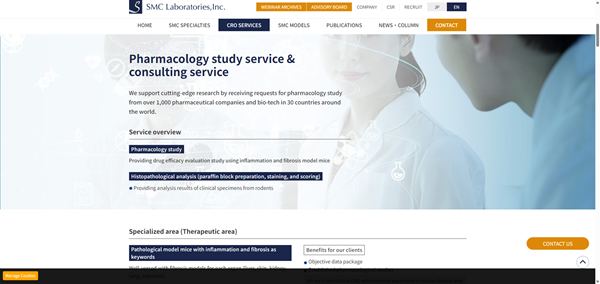
Pharmacology (Efficacy) StudiesDisease-Relevant Models for Translational Drug Evaluation
Reference: SMC Laboratories, Inc. official website (https://www.smccro-lab.com/)
SMC Laboratories, Inc.
SMC Laboratories is a specialized non-clinical CRO focused on in vivo pharmacology and efficacy studies using disease-relevant animal models, particularly in fibrosis, inflammation, metabolic diseases, and oncology.
Areas of Expertise
Disease-Relevant Model Portfolio
SMC Laboratories offers models covering the liver, lung, kidney, intestine, and oncology. Its portfolio includes the proprietary STAM™ model for MASH, fibrosis, and hepatocellular carcinoma.
Study Design Based on Target Biology
Study plans are developed around the target biology, mechanism of action, disease stage, and development objective. Pharmacological endpoints can be combined with histopathology, biomarkers, and disease-specific readouts.
Support from Target Validation to Proof of Concept
With experience from more than 1,000 studies for clients in 30 countries, SMC Laboratories supports programs from target validation and candidate selection through in vivo proof-of-concept studies.
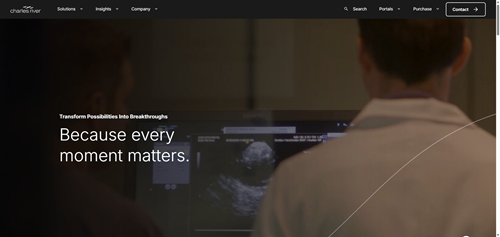
Safety StudiesComprehensive Safety Assessment for Preclinical Development
Reference: Charles River Laboratories official website (https://www.criver.com/)
Charles River Laboratories
Charles River provides non-clinical toxicology and safety assessment services for programs ranging from exploratory safety studies to IND-enabling development.
Areas of Expertise
General Toxicology Across Study Designs
Services include single- and repeat-dose toxicology, dose-range finding, and general toxicology studies across multiple species and administration routes.
Non-GLP and GLP Study Support
Charles River supports both non-GLP and GLP studies, allowing sponsors to progress from early safety characterization to studies intended for regulatory submissions.
Integrated IND-Enabling Safety Assessment
Toxicology studies can be integrated with toxicokinetics, clinical pathology, histopathology, and safety pharmacology to support interpretation and IND-enabling safety packages.
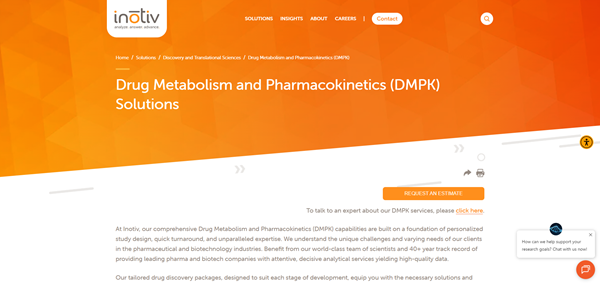
Pharmacokinetic (PK/PD) StudiesConnecting Drug Exposure with Pharmacological Response
Reference: Inotiv official website (https://www.inotiv.com/)
Inotiv
Inotiv provides integrated PK/PD, DMPK, and bioanalytical services to characterize drug exposure and its relationship with pharmacological response.
Areas of Expertise
Pharmacokinetic Characterization
PK studies characterize exposure, half-life, clearance, and other pharmacokinetic parameters needed to understand how a candidate behaves in the selected model.
Exposure–Response Evaluation
Pharmacokinetic data can be combined with pharmacodynamic endpoints and bioanalysis to evaluate the relationship between drug exposure and pharmacological response.
Integrated DMPK and Development Support
Integrated DMPK, pharmacology, and safety information supports candidate comparison, dose selection, dosing-frequency optimization, and decisions about subsequent preclinical development.

 Japanese