Evotec SE
Evotec SE is a global contract research organization (CRO) headquartered in Hamburg, Germany, supporting a broad range of research activities from drug discovery through preclinical development. The company provides in-house nonclinical studies and has established comprehensive testing platforms covering pharmacokinetics, safety evaluation, and translational research.
This page provides an overview of Evotec SE’s nonclinical research capabilities and representative disease models.
Features of Evotec SE’s Contract Services for Non-Clinical Studies
Pharmacokinetic and DMPK studies for comprehensive candidate profiling
Evotec SE conducts integrated evaluation of absorption, distribution, metabolism, and excretion to support the selection of candidate compounds for clinical advancement.
Both in vitro and in vivo DMPK studies are available, including metabolite identification and assessment of drug–drug interactions (DDI).
Advanced analyses such as radiolabeled studies and bioanalysis enable clarification of the relationship between efficacy and safety.
Consistent data generation from hit identification through early clinical stages supports robust development strategy planning.
Safety assessment from discovery-stage screening to GLP-compliant studies
Evotec SE offers end-to-end safety evaluation, from exploratory studies through GLP-compliant repeated-dose toxicity studies, enabling comprehensive toxicity profiling of candidate compounds.
Testing capabilities include general toxicity, genotoxicity, and safety pharmacology, with support for multiple routes of administration such as oral, injectable, and continuous dosing.
In addition, integration with the INDiGO program streamlines generation of nonclinical safety data required for IND submissions, helping to meet regulatory requirements while reducing early development risk.
Integrated development support with a focus on IND submission
With a view toward IND submission and early clinical development, Evotec SE provides integrated support across development, manufacturing, and regulatory functions. More than 4,000 scientific experts support project design across analytical method development, CMC, bioanalysis, and pharmacometrics.
Through the INDiGO integrated IND-enabling package, Evotec SE accelerates transition to first-in-human (FIH) studies while maintaining a development framework scalable through Phase II and III supply.
Examples of Disease Models Available at Evotec SE
Humanized immune system mouse IBD model (DSS-induced)
Colitis is induced in humanized immune system mice using DSS, enabling evaluation of the efficacy of human-specific antibodies and other therapeutic modalities. Dose-dependent inflammatory markers and histopathological changes can be assessed, with inclusion of human cytokine measurements to enhance clinical translatability.
Accelerated diabetic kidney disease model (Renin-AAV db/db Unx)
This model combines renin overexpression, unilateral nephrectomy, and a db/db genetic background to induce hyperglycemia and hypertension. Disease progression, including proteinuria and glomerulosclerosis, can be longitudinally evaluated in a pathological context closely resembling human type 2 diabetes. Benchmarking against standard-of-care therapies is also supported.
Evotec SE Non-Clinical Case Study
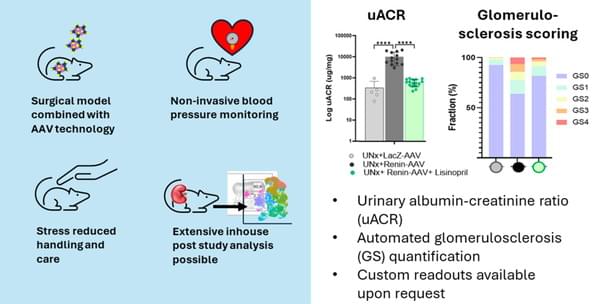
Efficacy evaluation in an accelerated diabetic kidney disease model (Renin-AAV db/db Unx)
Using the Renin-AAV db/db Unx model, disease progression driven by hyperglycemia and hypertension was quantified through assessment of proteinuria and glomerulosclerosis.
Benchmarking with standard-of-care treatments enables evaluation of candidate compound efficacy using clinically relevant endpoints such as uACR and glomerulosclerosis scoring.
The study design emphasizes translational relevance to human type 2 diabetic kidney disease.
Reference: Evotec SE's official website (https://www.evotec.com/solutions/therapeutic-areas/renal-diseases/in-vivo-renal-disease)
Reference: Evotec SE's official website (https://www.evotec.com/solutions/therapeutic-areas/renal-diseases/in-vivo-renal-disease)
Evotec SE Company Information
| Address |
Essener Bogen 7, 22419 Hamburg, Germany |
| Tel |
+49 (0)40 560 81-0 |
| Website |
https://www.evotec.com/ |

 Japanese

